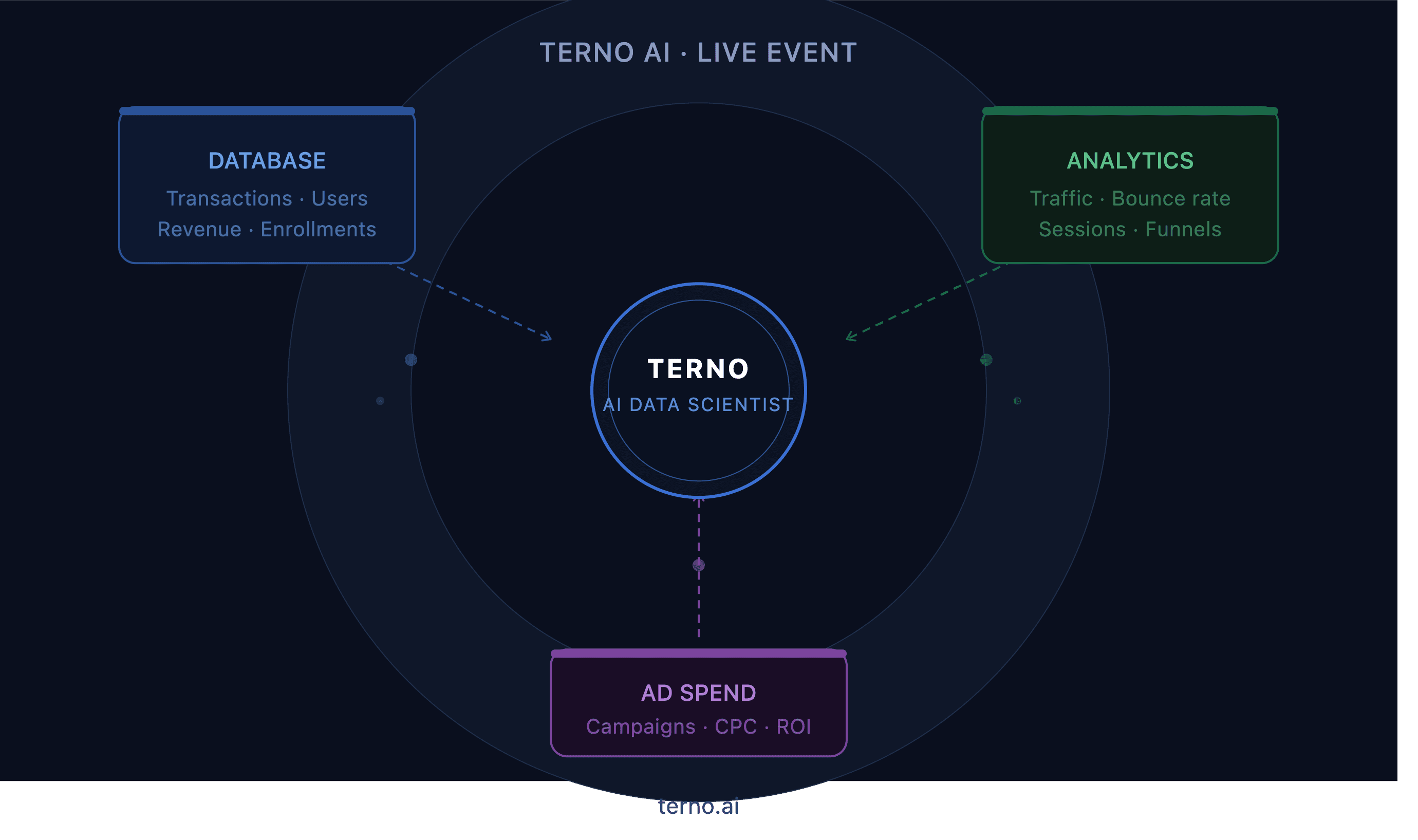
See how Terno reasons across your database, analytics, and ad spend
Every business has the same problem: the answer to their hardest question is never in one place.
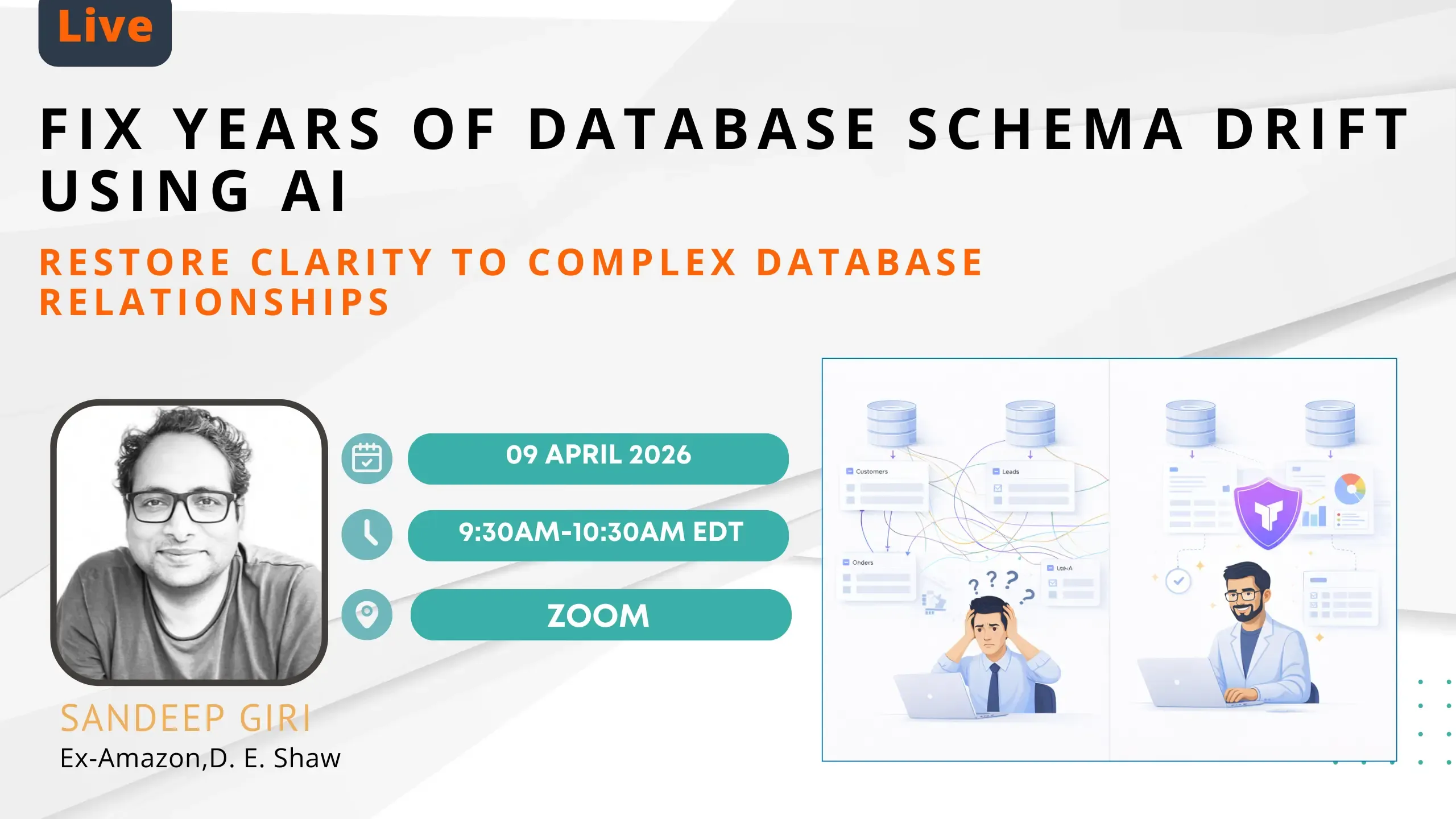
Your database holds what actually happened — transactions, enrollments, conversions. Your analytics platform holds who showed up and what they did. Your ad accounts hold what you spent to get them there. Three systems. Three partial truths. And no single tool that reads all three at once.
Terno does.
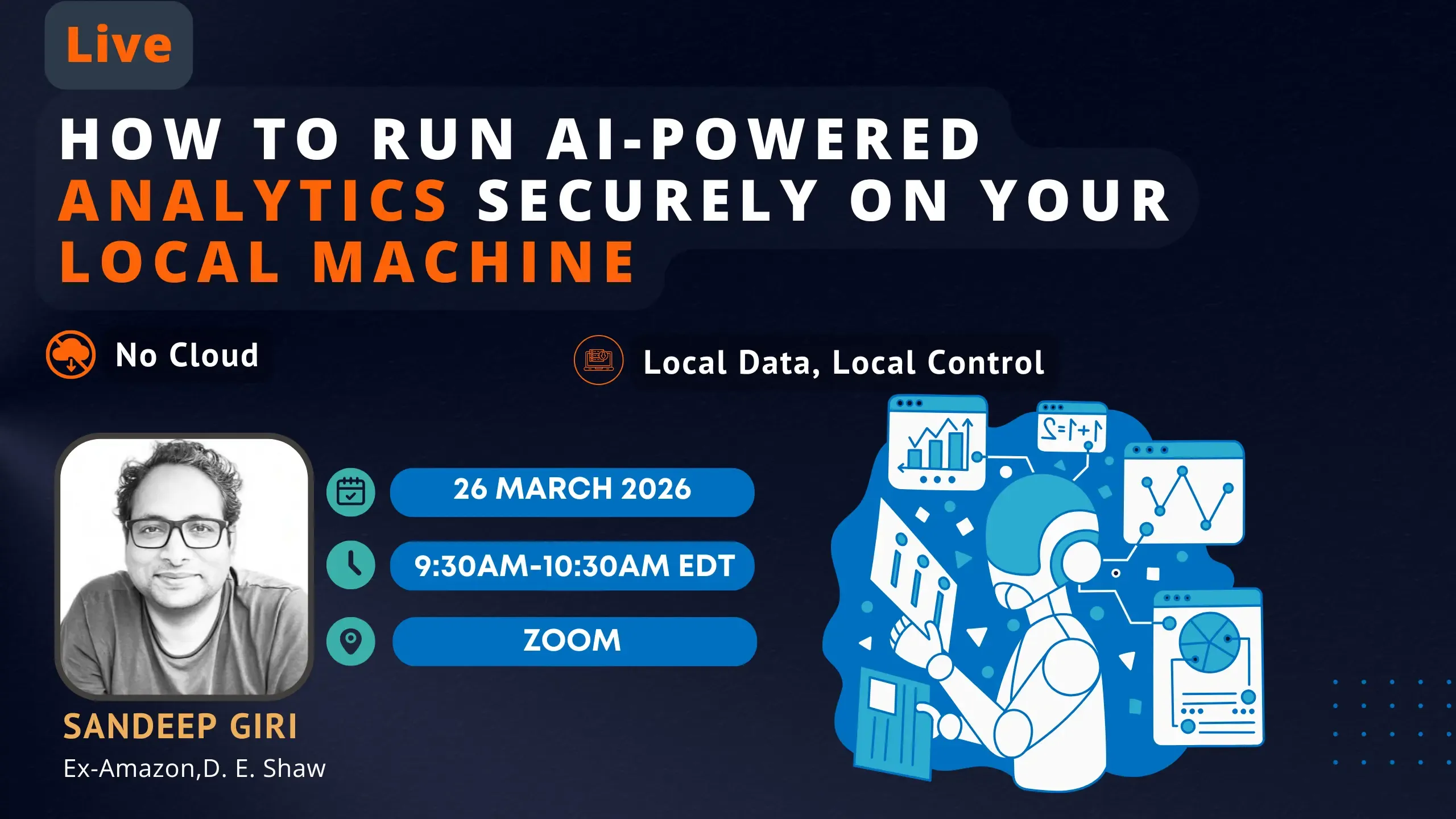
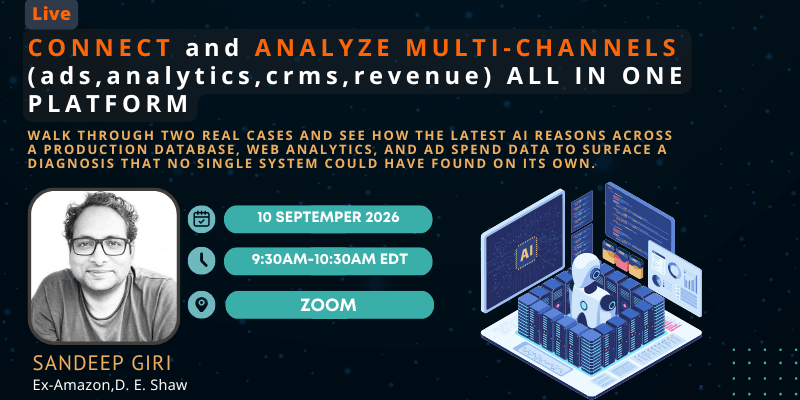
In this session, we'll walk through two real cases where Terno reasoned across a production database, web analytics, and ad spend data to surface a diagnosis that no single system could have found on its own.
What we'll cover:
How Terno connects to your database, analytics, and ad platforms and builds a shared understanding of your business — automatically
A live walkthrough of a real revenue collapse diagnosis: what the database showed, what the analytics showed, what the ad data showed, and how Terno connected them into a single root cause
A second independent case study demonstrating the same approach on a different business
How the semantic layer works — what's automated, what benefits from a short guided setup, and why it matters for getting answers you can actually trust
A live demo: ask Terno a cross-source question and watch it reason in real time
Who should attend:
Founders and operators who want faster answers from their data without hiring a data team
Data and analytics leads at companies running on multiple data sources who are tired of reconciling dashboards manually
Product and growth teams who need to connect acquisition data with product/revenue data to understand what's actually working
Anyone evaluating AI analytics tools who wants to see what "multi-source reasoning" actually looks like in practice, not just in a slide deck
What Terno is:
Terno is an AI data scientist that connects to every system holding a piece of business truth — your database, your analytics, your ad platforms, and on the roadmap: your CRM, ERP, logs, and internal documentation. It builds a semantic layer on top of your data automatically, then lets you ask questions across all of it in plain language.
The answers are grounded in real data execution, not AI guesswork.