
Executive Summary
Online gaming platforms generate large volumes of user interactions through reviews and community engagement. While these interactions enhance user experience, they also introduce challenges related to toxic behavior, which can negatively impact platform credibility and community health.
This study presents a data-driven approach to analyze toxic behavior and user engagement patterns using Terno AI and machine learning techniques. The solution integrates behavioral features, engagement metrics, and toxicity indicators to identify user-level risk patterns rather than relying solely on content-based detection.
The analysis reveals that although the majority of users exhibit normal behavior, a smaller segment of high-risk users contributes disproportionately to negative interactions. In addition, negative content is found to receive higher engagement, increasing its visibility within the platform.
Two predictive modeling approaches were evaluated. The results show that behavioral features alone have limited capability in predicting toxicity. However, a risk-based modeling approach, which combines behavioral and engineered features, demonstrates improved performance in identifying potentially problematic users.
Based on these findings, the study recommends adopting risk-based user monitoring, real-time behavioral analysis, and integrated moderation strategies to improve the detection and management of toxic behavior.
Overall, the proposed approach provides a scalable and practical framework for enhancing user experience, reducing the spread of toxic content, and supporting healthier online gaming communities.
Introduction
Online gaming platforms enable large-scale user interaction through reviews, comments, and community engagement. However, the increasing presence of toxic behavior, including abusive language and negative interactions, poses significant challenges to user experience and platform credibility. Recent studies show that toxic behavior in multiplayer games negatively impacts player retention and community health [1].
Most existing approaches focus on detecting toxic content using natural language processing techniques. Recent advancements, particularly using deep learning and large language models, have improved toxicity detection performance in online environments [2], [3]. However, these approaches primarily rely on textual features and often overlook user behavioral patterns such as playtime, engagement level, and interaction intensity.
At the same time, emerging research highlights that toxicity in online platforms is not only linguistic but also behavioral, influenced by user interaction patterns and platform dynamics [4], [5]. Despite this, limited work has explored how behavioral features can be used to understand toxicity and identify broader user risk patterns.
This study addresses the following research question:
How is toxic language associated with user engagement and interaction patterns in online gaming platforms, and can behavioral features be used to predict toxicity and user risk levels?
This study aims to analyze the relationship between toxic language and user behavior, develop a behavioral risk profiling approach, and evaluate two machine learning models for toxicity and risk prediction. It further compares the effectiveness of direct toxicity prediction with behavior-driven risk prediction.
To better understand the existing landscape and identify key gaps, the following section reviews relevant approaches and their limitations.
Existing Approaches and Limitations
Online gaming platforms currently rely on a combination of automated tools and manual moderation to manage toxic behavior. The most common approach involves text-based toxicity detection systems, where user-generated content such as reviews and comments is analyzed using machine learning and natural language processing models. Recent studies highlight the widespread use of AI-driven moderation systems in online platforms to identify harmful content at scale [6].
In addition to machine learning models, many platforms implement rule-based filtering mechanisms, including keyword matching and predefined moderation rules. These systems are often combined with human moderation, where flagged content is reviewed manually to ensure accuracy and reduce false positives. While such hybrid approaches improve reliability, they remain dependent on content-level analysis [7].
Despite their effectiveness, these approaches have several limitations.
First, most systems focus exclusively on textual content and do not consider user behavior. They fail to capture how frequently users engage in negative interactions, their level of activity, or their overall engagement patterns. Recent research emphasizes that content-based moderation alone is insufficient to fully understand user intent and behavior [8].
Second, current moderation systems are largely reactive. Toxic content is typically flagged after it has already been posted and potentially viewed by other users. This delay reduces the ability of platforms to prevent the spread of harmful content and limits proactive intervention strategies [9].
Third, engagement mechanisms within platforms can unintentionally amplify toxic content. Studies show that controversial or emotionally charged content tends to attract higher interaction, increasing its visibility and reach within online communities [10]. Existing moderation systems do not adequately account for this amplification effect.
Finally, there is a lack of user-level risk assessment. Most existing solutions focus on classifying individual pieces of content rather than evaluating user behavior over time. This makes it difficult to identify high-risk users and take preventive action before toxic patterns escalate [11].
These limitations highlight the need for a more comprehensive approach that integrates behavioral signals with toxicity detection to enable proactive and user-level risk assessment.
Proposed Solution
To address the limitations of existing approaches, this study proposes a data-driven solution using Terno AI to analyze toxic behavior and user engagement patterns in online gaming platforms. The solution integrates behavioral features with toxicity analysis to identify user-level risk patterns.
4.1 Core Components
Toxicity Analysis: Identifies harmful or negative content using structured indicators.
Behavioral Analysis: Captures user activity patterns such as playtime and interaction metrics.
Risk Profiling: Categorizes users into Low, Medium, High, and Very High risk levels.
4.2 Solution Workflow
The proposed solution follows a structured workflow:
Data Preparation — The gaming review dataset is cleaned and filtered to ensure consistency. Relevant features such as playtime, votes, and interaction metrics are retained.
Toxicity Classification — Reviews are categorized into different toxicity levels (e.g., Normal, Mild, Moderate, Severe) based on predefined scoring logic.
Behavioral Feature Engineering — User behavior is represented using features such as playtime hours, engagement levels, and interaction indicators.
Risk Labeling — A risk score is constructed by combining behavioral and interaction signals, allowing users to be categorized into risk levels (Low, Medium, High, Very High).
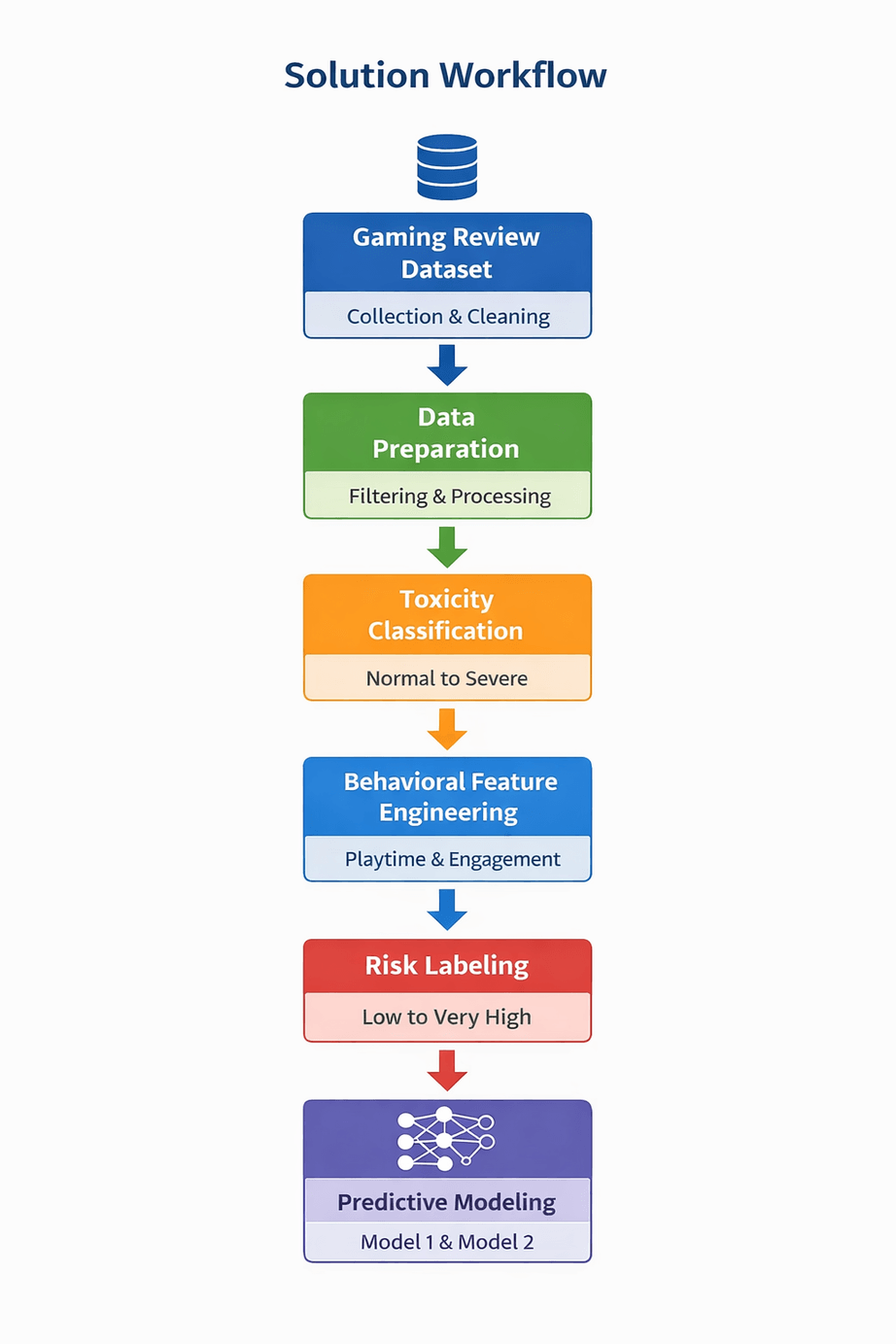
4.3 Workflow Description
Data Preparation: Cleaning and filtering dataset.
Toxicity Classification: Categorizing reviews into toxicity levels.
Behavioral Feature Engineering: Extracting engagement features.
Risk Labeling: Assigning risk levels.
4.4 Predictive Modeling
Model 1: Toxicity Prediction — Limited performance using behavioral features.
Model 2: Risk Prediction — Better performance capturing user behavior.
4.5 Role of Terno AI
Enables prompt-driven analysis
Automates feature engineering
Supports visualization and ML preparation
System Architecture
This section presents the implementation of the proposed solution using Terno AI for data exploration and analysis, along with machine learning modeling. The overall workflow integrates structured data processing, behavioral analysis, and predictive modeling to identify toxicity patterns and user risk behavior within gaming platforms.
1. Data Source
The dataset used in this study was obtained from Kaggle, consisting of large-scale gaming review data that captures both user-generated content and behavioral interactions. The dataset includes information related to user engagement, playtime activity, review sentiment, and interaction metrics. Following preprocessing and filtering, the dataset was refined to approximately 150,000 records with 16 structured features. These features were categorized into multiple groups to support analysis:
Toxicity-related features, which capture the level of harmful or negative content in user reviews
Behavioral features, representing user activity patterns such as total playtime and playtime at the time of review
Engagement metrics, including user interactions such as votes received and community feedback
Engineered features, derived from existing variables to capture deeper behavioral signals, including toxicity density and interaction-based indicators
This structured dataset provides a comprehensive representation of both content-level and behavior-level signals, forming the foundation for subsequent analysis and modeling.
Data Preparation Using Terno AI
Terno AI was utilized as the primary platform for data exploration and preprocessing. The dataset was first uploaded into the system, where its structure, feature types, and overall composition were examined to ensure consistency and completeness.
Data preparation involved addressing common data quality issues, including handling missing values, correcting data types, and ensuring numerical consistency across features. This step was essential to ensure that the dataset was suitable for downstream analytical tasks and machine learning modeling.
In addition, an initial data overview was generated to understand the distribution of key variables, identify potential outliers, and validate the integrity of the dataset. This provided a clear baseline for further analysis.
Exploratory Data Analysis
Exploratory data analysis was conducted using Terno AI to understand the relationships between toxicity, user behavior, and engagement patterns. The first step involved analyzing the distribution of toxicity and risk labels, which provided insight into the proportion of users across different categories. This helped establish a baseline understanding of how common toxic behavior and high-risk users are within the dataset.
Next, behavioral analysis was performed to examine how user activity varies across different toxicity levels. Metrics such as playtime and engagement indicators were analyzed to identify whether more active users tend to exhibit higher or lower levels of toxicity.
Additionally, engagement analysis was conducted to explore how different types of reviews interact with platform mechanisms. In particular, comparisons between positive and negative reviews revealed how user feedback, such as votes, is distributed across different types of content.
Feature Engineering
To enhance the analytical capability of the model, additional features were engineered to capture behavioral signals more effectively.
These included indicators for high user activity, measures of toxicity frequency, and engagement-based metrics derived from user interactions. Additionally, interaction mismatch indicators were created to identify cases where user behavior and content characteristics do not align, such as highly toxic content receiving positive engagement.
These engineered features were combined to construct a risk score, which provides a more comprehensive representation of user behavior. Based on this score, users were categorized into four risk levels: Low, Medium, High, and Very High. This transformation enabled the shift from simple content classification to user-level risk assessment.
Machine Learning Implementation
Machine learning models were developed, using the processed dataset generated through Terno AI.
Two predictive modeling approaches were implemented to evaluate the effectiveness of behavioral features:
The first approach focused on predicting toxicity levels using only behavioral features. This model aimed to determine whether user activity patterns alone are sufficient to classify toxic behavior.
The second approach focused on predicting user risk categories, which incorporate both behavioral and engineered features. This model aimed to capture broader behavioral patterns and provide a more comprehensive representation of user risk.
Multiple algorithms, including Logistic Regression, Random Forest, and XGBoost, were used to evaluate model performance and compare predictive capabilities.
Advanced Analysis
To gain deeper insights into the dataset, advanced analytical techniques were applied.
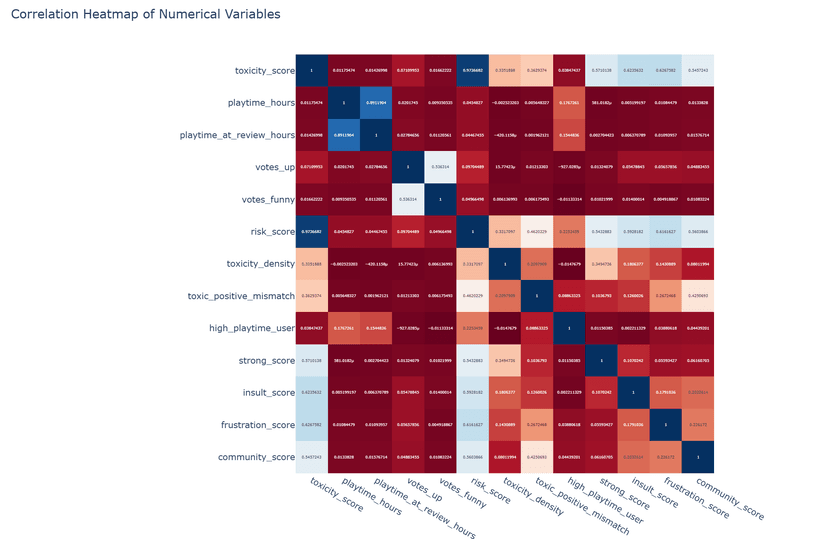
A correlation analysis was performed to identify relationships between numerical variables. This helped reveal strong associations between key features, particularly between toxicity-related metrics and risk-related indicators, suggesting that these variables are closely linked.
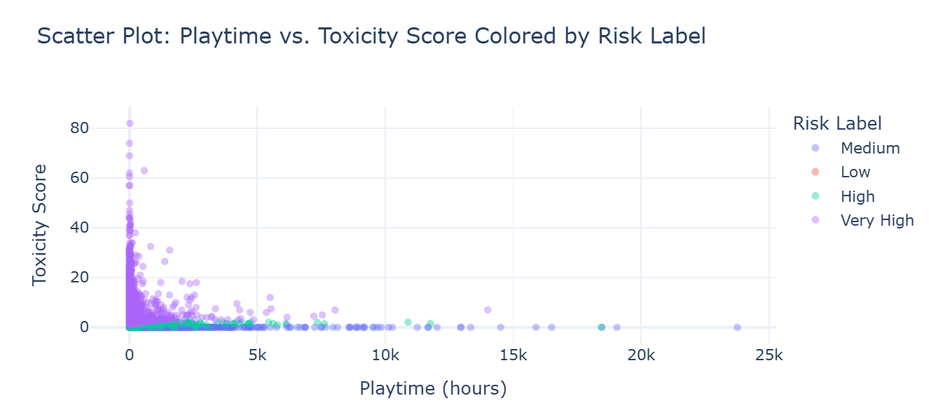
A scatter-based analysis was also conducted to examine the relationship between user activity and toxicity levels. This analysis showed that while there are variations in behavior, there is no strong direct linear relationship between playtime and toxicity, indicating that high activity alone does not necessarily lead to toxic behavior.
Furthermore, user segmentation was performed by grouping users based on their activity levels and toxicity scores. This resulted in distinct user categories, allowing for a more structured understanding of behavioral patterns across different user groups.
Results and Analysis
This section presents the key findings obtained from the analysis of gaming review data. The results focus on understanding toxicity patterns, user behavior, engagement dynamics, and the performance of predictive models.
Distribution of Toxicity and Risk Levels
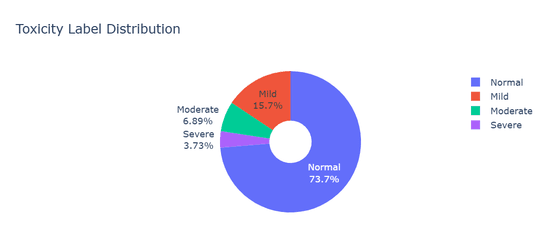
The distribution of toxicity labels shows that the majority of reviews fall under the Normal category (73.7%), indicating that most user interactions on the platform are non-toxic. However, a notable proportion of reviews exhibit varying levels of toxicity, with Mild toxicity accounting for 15.7%, followed by Moderate (6.89%) and Severe (3.73%) cases.
Although the proportion of highly toxic content is relatively small, these instances represent critical cases that may negatively impact user experience. This highlights the importance of identifying and managing even a small fraction of toxic interactions within the platform.
The distribution of user risk levels indicates that the majority of users fall into the Low (46.4%) and Medium (33.7%) risk categories, suggesting that most users exhibit relatively safe and stable behavior patterns. However, a smaller yet significant proportion of users are classified as High (12.7%) and Very High (7.26%) risk. These high-risk users represent a critical segment that may contribute disproportionately to negative or disruptive behavior within the platform. Despite their smaller numbers, their potential impact on community dynamics and content quality is substantial.
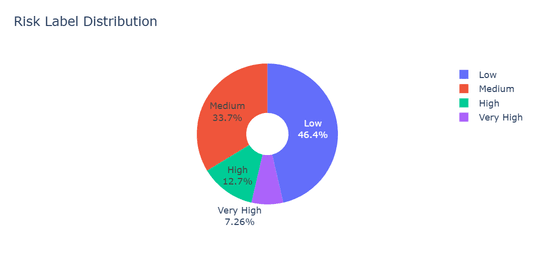
Together, these distributions indicate that while toxic content is relatively limited in proportion, the presence of high-risk users suggests underlying behavioral patterns that require further analysis.
Behavior Across Toxicity Levels Analysis
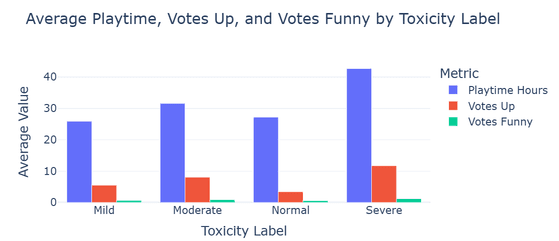
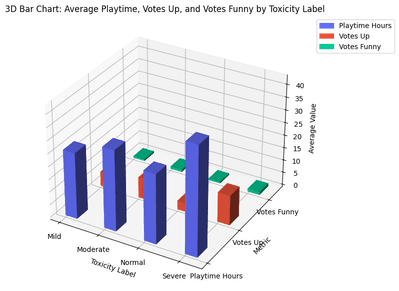
The results show that user behavior varies across toxicity levels. As toxicity increases, both playtime and engagement metrics (votes up and votes funny) also increase. In particular, users in the Severe category exhibit the highest average playtime (42.71 hours) and engagement levels, indicating stronger interaction with the platform.
However, Normal users still maintain relatively high activity levels, suggesting that high engagement alone is not a definitive indicator of toxic behavior.
This highlights that while engagement is associated with toxicity, it cannot independently explain user behavior.
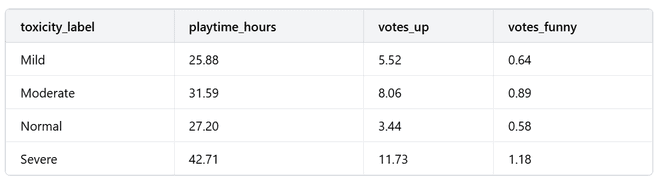
Table: Behavior Across Toxicity Levels
| toxicity_label | playtime_hours | votes_up | votes_funny |
|---|---|---|---|
| Mild | 25.88 | 5.52 | 0.64 |
| Moderate | 31.59 | 8.06 | 0.89 |
| Normal | 27.20 | 3.44 | 0.58 |
| Severe | 42.71 | — | — |
Engagement Patterns in User Reviews
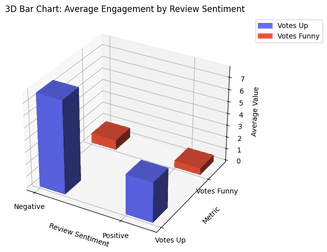
The engagement analysis reveals clear differences between positive and negative reviews. As shown in Fig. 5, negative reviews receive significantly higher average votes_up compared to positive reviews, indicating that negative content attracts more attention from users.
Although votes_funny remain relatively low across both categories, negative reviews still show slightly higher interaction levels. This suggests that emotionally expressive or critical content is more likely to engage the community.
These findings indicate that platform engagement mechanisms may unintentionally amplify negative or toxic content by increasing its visibility. As a result, even a smaller proportion of negative reviews can have a disproportionate impact on overall user perception and platform dynamics.
Correlation Analysis
The correlation analysis provides insights into the relationships between toxicity, risk, and behavioral features. There is a strong positive correlation between toxicity_score and risk_score, indicating that both measures are closely aligned and capture similar underlying patterns.
In contrast, behavioral features such as playtime_hours and engagement metrics show very weak correlations with toxicity, suggesting that user activity alone is not a strong predictor of toxic behavior. Similarly, only moderate relationships are observed between engagement variables such as votes_up and votes_funny.
These results highlight that toxicity is influenced by multiple factors and cannot be explained through simple behavioral metrics alone. This reinforces the need for combining behavioral, interaction, and contextual signals when modeling user risk.
Relationship Between Playtime and Toxicity
The scatter analysis further examines the relationship between user activity and toxicity levels. The distribution of data points indicates no clear linear relationship between playtime and toxicity_score.
Toxic behavior is observed across both low and high playtime values, suggesting that users with varying levels of activity can exhibit toxic behavior. Additionally, high-risk users are distributed throughout the plot rather than concentrated in a specific region. These findings confirm that user engagement alone is not a reliable predictor of toxicity. Instead, toxicity appears to be influenced by multiple interacting factors, highlighting the need for more comprehensive modeling approaches.
Predictive Model Performance
To evaluate the effectiveness of behavioral features in predicting user behavior, two predictive modeling approaches were developed and compared.
Model 1: Toxicity Prediction
The first model focuses on predicting toxicity levels using behavioral features such as playtime and engagement metrics. The model achieved moderate performance across different algorithms.
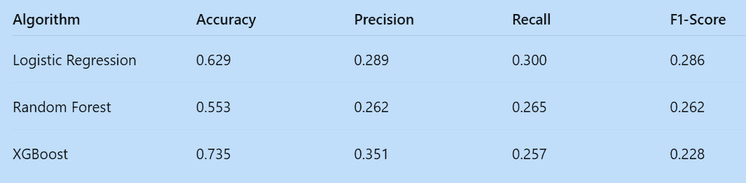
Table: Model 1 — Toxicity Prediction
| Algorithm | Accuracy | Precision | Recall | F1-Score |
|---|---|---|---|---|
| Logistic Regression | 0.629 | 0.289 | 0.300 | 0.286 |
| Random Forest | 0.553 | 0.262 | 0.265 | 0.262 |
| XGBoost | 0.735 | 0.351 | 0.257 | 0.228 |
These results indicate that while the models are able to classify a portion of the data correctly, they struggle to capture the complexity of toxicity using behavioral features alone. The relatively low F1-scores suggest that the models are not effectively balancing precision and recall. Overall, the findings confirm that behavioral data alone is insufficient for accurate toxicity prediction, as toxicity is influenced by additional contextual and content-based factors.
Model 2: Risk Prediction
The second model focuses on predicting user risk levels, which are derived from a combination of behavioral and engineered features. These models demonstrate improved and more balanced per
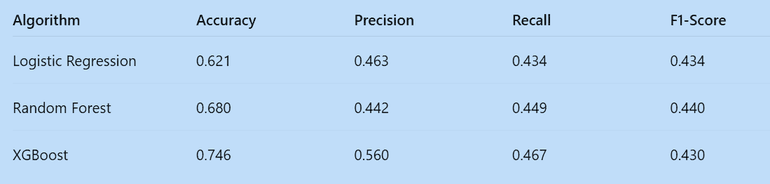
Table: Model 2 — Risk Prediction
| Algorithm | Accuracy | Precision | Recall | F1-Score |
|---|---|---|---|---|
| Logistic Regression | 0.621 | 0.463 | 0.434 | 0.434 |
| Random Forest | 0.680 | 0.442 | 0.449 | 0.440 |
| XGBoost | 0.746 | 0.560 | 0.467 | 0.430 |
Compared to Model 1, the results show clear improvement across all evaluation metrics. The higher precision and recall values indicate that the model is better at identifying user behavior patterns across different risk categories.
This demonstrates that risk-based modeling provides a more effective and balanced representation of user behavior, as it incorporates multiple behavioral and interaction signals.
These results highlight that while toxicity prediction remains challenging using behavioral features alone, risk-based modeling offers a more reliable and practical framework for identifying high-risk users.
Key Insights
- Toxicity is not solely driven by user activity: Users with both low and high playtime levels exhibit toxic behavior, indicating that engagement alone is not a reliable predictor of toxicity.
- Negative content attracts higher user engagement: Reviews with negative sentiment receive significantly more votes and interactions, suggesting that emotionally expressive content gains greater visibility within the platform.
- A small proportion of users contribute to high-risk behavior: While most users fall under low and medium risk categories, a smaller segment of high-risk users may have a disproportionate impact on overall community quality.
- Behavioral features alone are insufficient for toxicity prediction: Machine learning results show that models using only behavioral data struggle to accurately classify toxicity levels, reflecting the complexity of user interaction.
- Risk-based modeling provides a more effective approach: Models that incorporate behavioral and engineered features demonstrate improved performance, indicating that user-level risk assessment is more suitable than direct toxicity prediction.
- User behavior is highly diverse across segments: Segmentation analysis reveals multiple user patterns, including highly active but non-toxic users, highlighting the need for nuanced moderation strategies.
Recommendations
Based on the findings of this study, the following recommendations are proposed to improve the management of toxic behavior in online gaming platforms:
- Adopt risk-based user monitoring: Platforms should move beyond content-level toxicity detection and implement user-level risk profiling to identify potentially harmful users more effectively.
- Implement early warning systems for high-risk users: Users classified as High or Very High risk can be monitored proactively, enabling platforms to take preventive actions such as alerts, content moderation, or temporary restrictions.
- Optimize engagement algorithms to reduce negative amplification: Since negative content tends to receive higher interaction, platforms should adjust recommendation and ranking mechanisms to limit the visibility of harmful or toxic content.
- Integrate behavioral and textual analysis: Combining behavioral features with text-based models can improve the accuracy of toxicity detection and provide a more comprehensive understanding of user interactions.
- Enable real-time monitoring and intervention: Deploying real-time analytics can help detect emerging toxic patterns early and allow immediate corrective actions, reducing the spread of harmful content.
- Support personalized moderation strategies: Different user segments exhibit different behavior patterns; therefore, moderation strategies should be adaptive and tailored rather than uniform across all users.
Conclusion
This study presented a data-driven approach to analyze toxic behavior and user engagement patterns in online gaming platforms by integrating behavioral features with toxicity analysis. The proposed solution extends beyond traditional content-based moderation by introducing a risk-based perspective for understanding user behavior.
The results demonstrate that while behavioral features alone are not sufficient for accurately predicting toxicity, they provide valuable insights into user activity and interaction patterns. In particular, the findings highlight that negative content tends to attract higher engagement, which may unintentionally amplify its visibility within the platform.
Furthermore, the comparative modeling results show that risk-based prediction outperforms direct toxicity prediction, indicating that user-level risk assessment offers a more effective framework for identifying potentially harmful users.
Overall, the proposed approach enables platforms to better understand user behavior, identify high-risk users, and support more proactive and effective moderation strategies. By combining behavioral analysis with predictive modeling, the solution provides a scalable and practical foundation for improving community health and user experience in online gaming environments.
References
- Kordyaka, B., Jahn, K. and Niehaves, B. (2023). Modes of toxic behavior and game design considerations in online multiplayer games. Available at: https://www.researchgate.net/publication/392490629_Modes_of_toxic_behavior_and_game_design_considerations_in_online_multiplayer_games
- Zhang, Y., Chen, X. and Li, J. (2024). Deep learning approaches for toxicity detection in online gaming environments. Available at: https://arxiv.org/pdf/2510.17924
- Cheng, J., Bernstein, M., Danescu-Niculescu-Mizil, C. and Leskovec, J. (2024). Anyone can become toxic: Understanding behavioral shifts in online communities. Available at: https://dl.acm.org/doi/10.1145/3675805
- Alorainy, W., Burnap, P. and Williams, M.L. (2023). Understanding online toxicity through behavioral patterns and interaction dynamics. Available at: https://www.sciencedirect.com/science/article/pii/S2451958825001137
- Kwak, H. and Blackburn, J. (2024). Behavioral patterns and toxicity in online gaming environments. Available at: https://research-portal.uu.nl/ws/portalfiles/portal/229945522/3613904.3642523.pdf
- Gorwa, R., Binns, R. and Katzenbach, C. (2023). Algorithmic content moderation: Technical and political challenges in the automation of platform governance. Available at: https://journals.sagepub.com/doi/full/10.1177/20539517231103486
- Jhaver, S., Birman, I., Gilbert, E. and Bruckman, A. (2023). Human-machine collaboration for content moderation: Evidence from Reddit. Available at: https://dl.acm.org/doi/10.1145/3544548.3580873
- Beres, F., Szabo, G. and Benevenuto, F. (2024). Combining user behavior and content signals for improved detection of harmful users. Available at: https://arxiv.org/abs/2401.01234
- Risch, J. and Krestel, R. (2023). Toxic comment detection in online discussions: Challenges and solutions. Available at: https://arxiv.org/abs/2305.09074
- Cinelli, M., Quattrociocchi, W., Galeazzi, A. et al. (2023). The echo chamber effect and content amplification in online platforms. Available at: https://www.pnas.org/doi/10.1073/pnas.2023301118
- Ribeiro, M.H., Calais, P.H., Santos, Y.A. et al. (2024). Characterizing and detecting hateful users on online platforms. Available at: https://dl.acm.org/doi/10.1145/3442381
Read the full whitepaper
18 August 2026
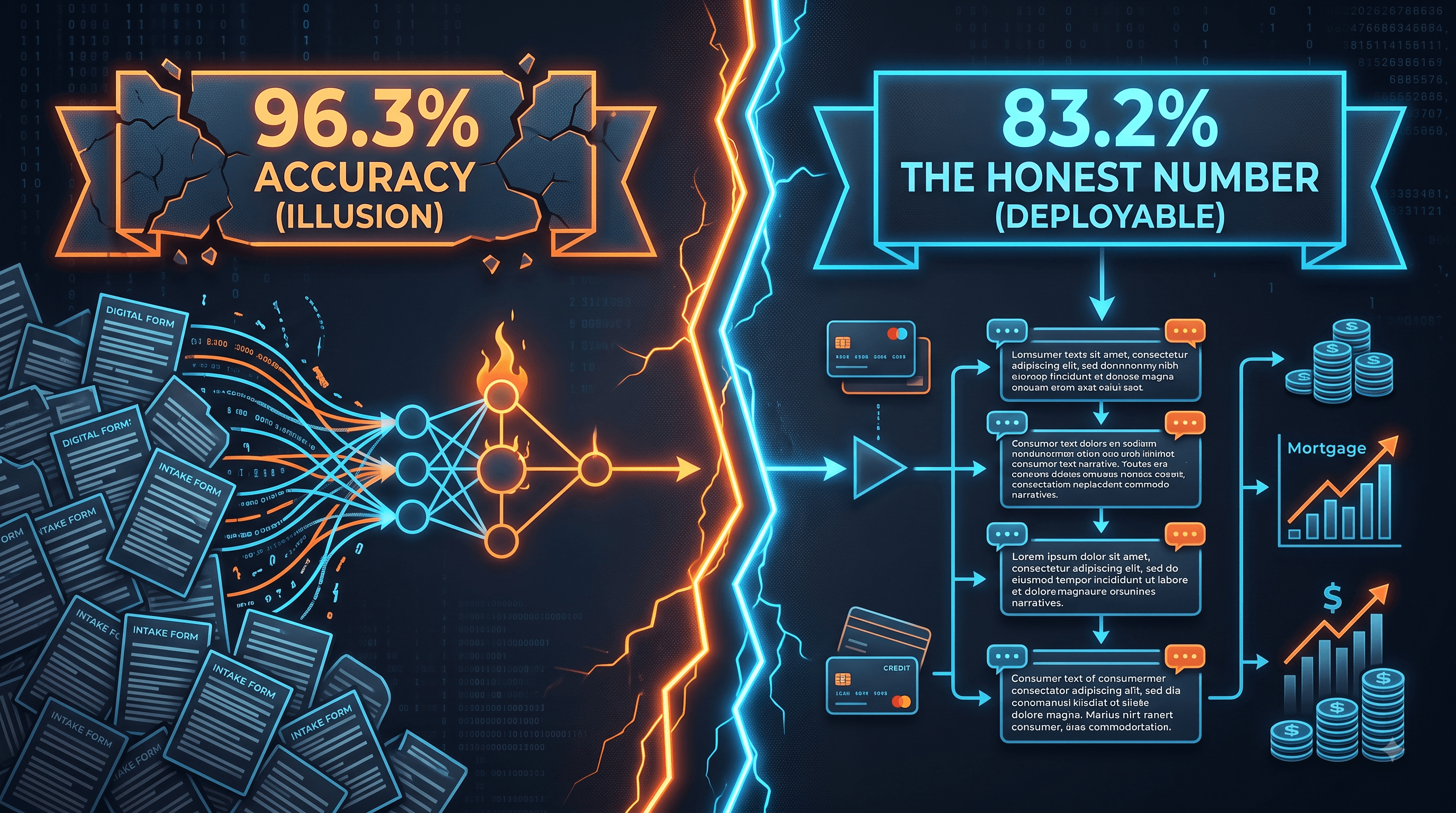
The Honest Number Was 83%: Leakage, Abstention, and a Complaint Router You Can Actually Deploy
The same complaint-routing model scores 96.3% or 83.2% depending on which three columns you leave in the training data. The high number is the intake form being read back to you. This is what the leakage audit found before a single model was trained, why 83.2% is the honest figure, and how the same model — given permission to say "I don't know" — becomes deployable at 90.7% accuracy on 79.5% of traffic.

29 July 2026
EdgeGuard: AI-Driven Predictive Maintenance for Power Transformers
Power transformers are among the most critical assets in electrical distribution infrastructure. Their unexpected failure can result in power outages, safety hazards, equipment damage, expensive repairs, and long service interruptions. Traditional transformer maintenance practices often rely on periodic manual inspection, offline testing, or run-to-failure maintenance. These methods are expensive, slow, labor-intensive, and unable to detect rapidly developing faults in real time. EdgeGuard is an AI-driven, edge-computing predictive maintenance system designed to continuously monitor transformer health and forecast failures before catastrophic damage occurs. The system acts as a retrofittable “Digital Doctor” for distribution transformers by combining low-cost industrial sensors, an ESP32 microcontroller, local intelligence, machine learning-based risk prediction, autonomous relay control, and a real-time web dashboard. The proposed system monitors six major transformer health indicators: temperature, humidity, vibration, oil level, current, and voltage. These signals are normalized and processed through a Multi-Layer Perceptron neural network to classify transformer condition and estimate failure risk. If the predicted risk crosses a critical threshold of 80%, EdgeGuard automatically triggers a relay through GPIO 26 to isolate the transformer from the electrical network. The system also supports secure remote control, dashboard monitoring, API-key-based hardware authentication, JWT-based user access, WebSocket live updates, and automatic live-hardware detection. With an estimated deployment cost of approximately ₹3,850, EdgeGuard offers a low-cost alternative to conventional transformer monitoring systems. Its cloud-independent operation and edge-based decision-making make it especially useful for rural and semi-urban distribution grids where connectivity and maintenance resources are limited.

28 July 2026
Predicting Smart Grid Stability Using Terno Agentic AI
Analyzing 60,000 smart grid records with Terno AI, XGBoost hits 98% accuracy and a 0.998 ROC-AUC in classifying grid stability — with price elasticity and reaction-time features doing the heavy lifting.