
Credit Risk Analysis: Predict If A Credit Card Holder Will Pay Dues On Time Using Terno AI
Overview
Credit card companies need to decide whether to approve credit card requests from a new customer. But since doing a hard check affects the credit score of the customer, they are not willing to do that. We aim to build a predictive model using Terno AI that determines whether the customer will pay dues on time. Using this model, the organization can decide whether to approve a credit card request **without **affecting the customer’s credit score. Check out the prompts used for this study here.
Table of Contents
Overview
Dataset
Objective
Terno AI
Our Approach: From Data to Decisions
Insights & Findings by Terno AI
Key Predictive Factors
Recommendations by Terno AI
Conclusion
Dataset
We chose the dataset below that fits our criteria from Kaggle.
Objective
To identify **risk customer** profilesTo predict if a credit card holder will default on their credit
Terno AI
Terno AI is a secure, conversational AI-powered data scientist that enables quick and precise insights through natural language, customized to your data. It’s an effective solution for saving our time and valuable resources. Terno AI builds an end-to-end pipeline from data cleaning to model generation just by taking simple prompts as input. It’s a **game-changer **in the field of data science.
Our Approach: From Data to Decisions
Finding Dataset
Data Cleaning & Pre-processing
Exploratory Data Analysis
Prediction Model
Evaluation
We asked Terno AI to generate insights and build a pipeline for our use case by using the following prompt:
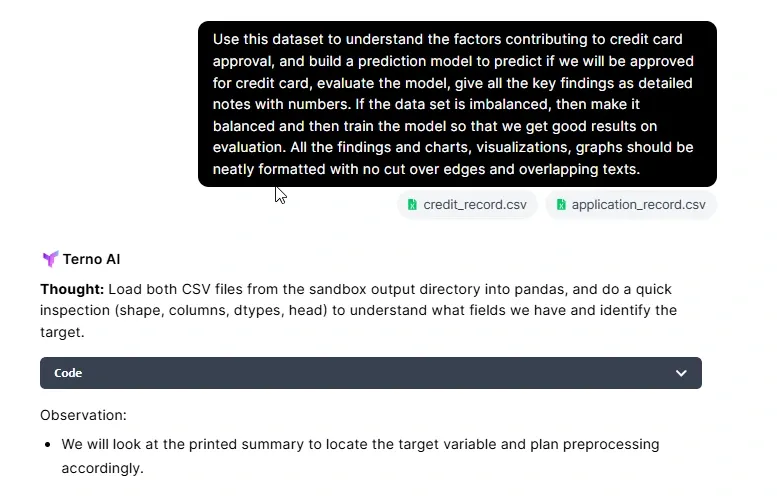
Prompt: Use this dataset to understand the factors contributing to credit card approval, and build a prediction model to predict if we will be approved for credit card, evaluate the model, give all the key findings as detailed notes with numbers. If the data set is imbalanced, then make it balanced and then train the model so that we get good results on evaluation. All the findings and charts, visualizations, graphs should be neatly formatted with no cut over edges and overlapping texts.
Terno Response: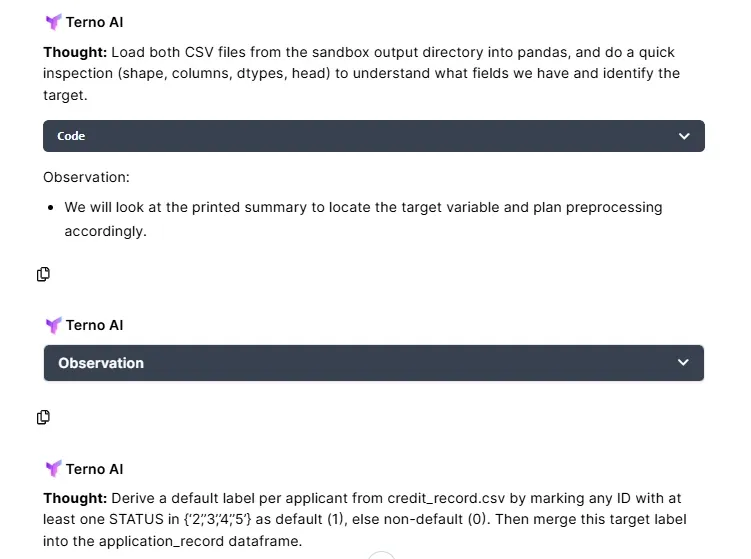
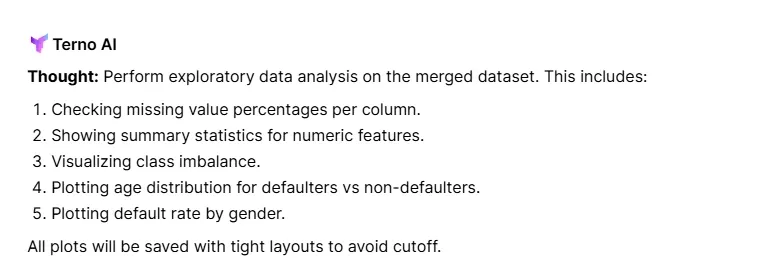
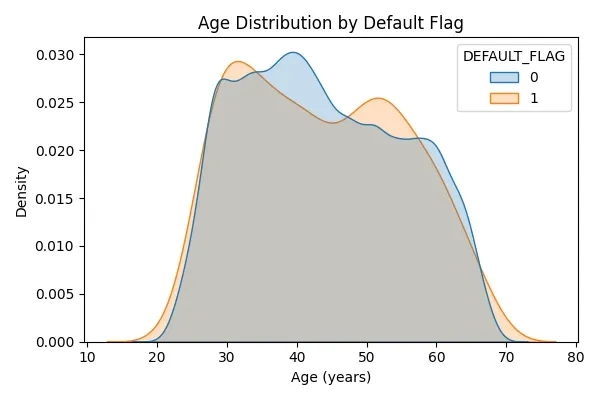
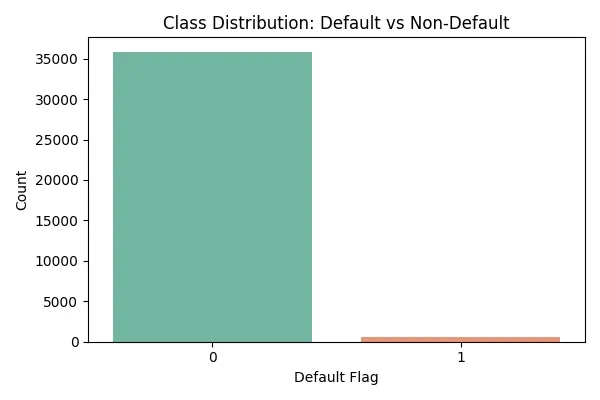
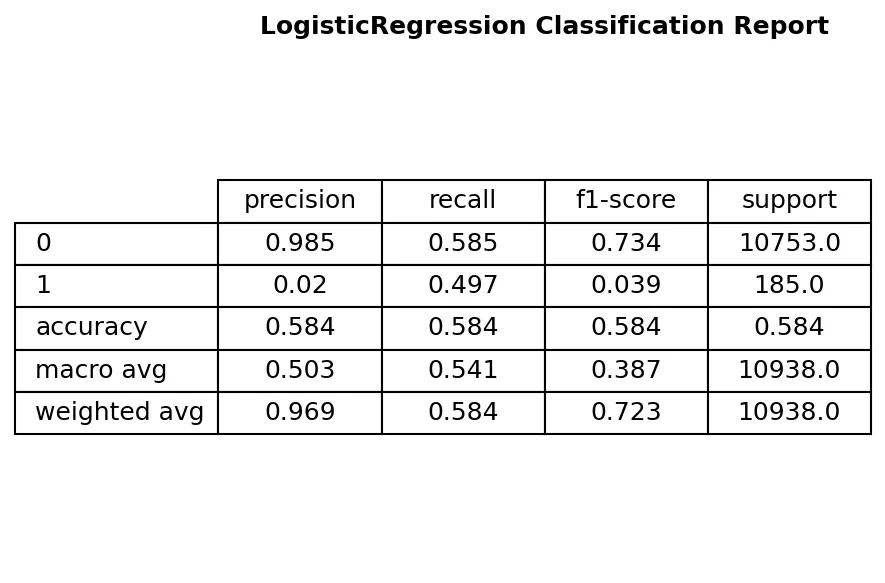
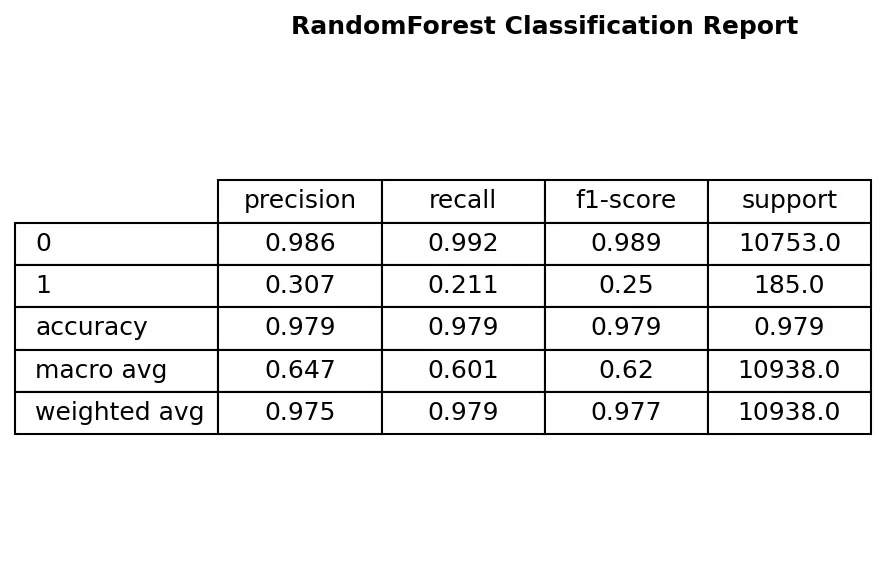
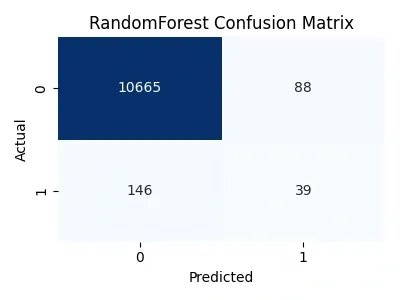
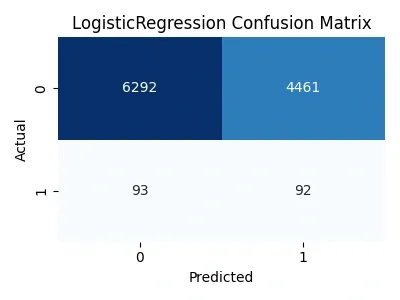
Next, we evaluate the models and compare the efficiency of the two models.
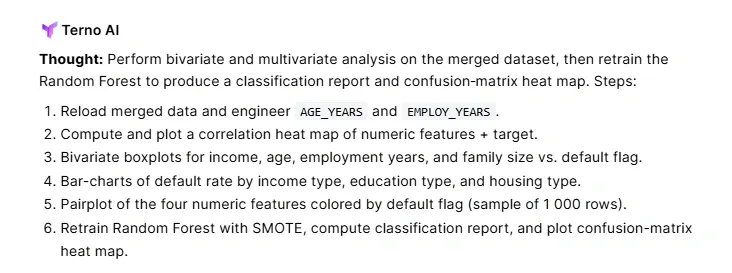
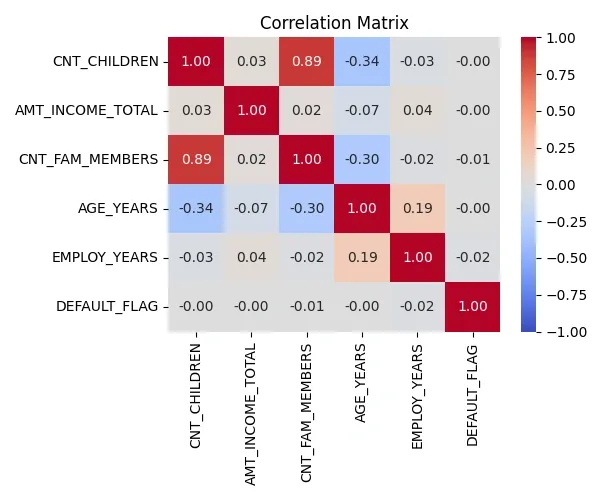
**Prompt: **Please do bivariate and multivariate analysis of the same, i also need classification report, heat map

Terno Response:
Correlation Matrix
Classification Report
Feature Importance
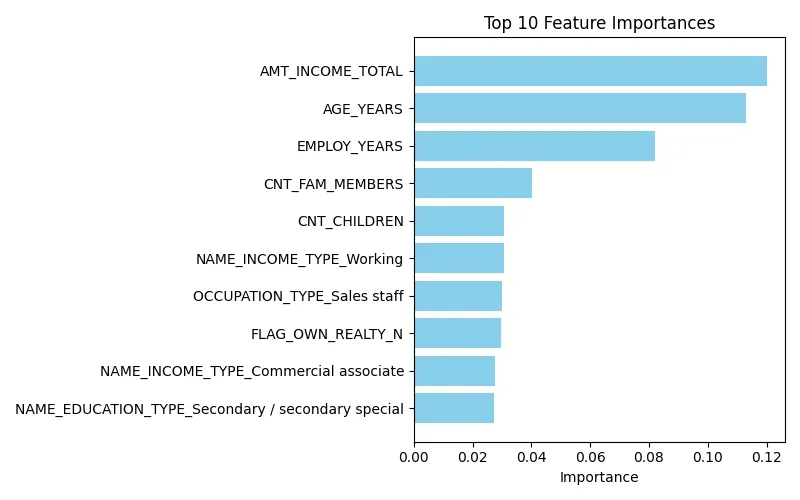
Insights & Findings by Terno AI
What the Data Says About Credit Defaults
When we set out to explore credit risk, we had two big datasets in hand: one with over 438,000 applicant profiles and another with more than a million monthly balance records. After merging them, we focused on applicants who had ever shown signs of trouble (statuses 2, 3, 4, or 5). That left us with 36,457 people—but only 616 of them were defaulters. Just 1.69%, a tiny fraction, which already hinted at how tough this prediction problem would be.
Cleaning the data brought its own surprises. About a third of applicants hadn’t shared their occupation, so we grouped them under “Unknown.” A few had impossible values in employment days—positive numbers when they should’ve been negative—so we fixed those using the median.
Looking closer, some patterns stood out:
The typical income was around $135,000, and most households had two members.
The median age was 44 years, but those who defaulted tended to be younger—closer to 40 on average.
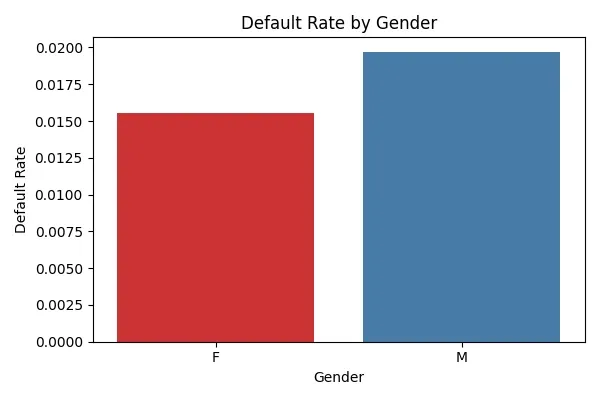
Even gender showed a subtle difference: men defaulted slightly more often (1.8%) than women (1.6%).
Small differences, but together they start painting a picture of who might be at risk.
Key Predictive Factors
When we examined the data, certain patterns became very clear — specific traits consistently indicated whether someone was more likely to default or not.
Higher risk of default
Younger applicants: Individuals at the beginning of their financial journey often exhibit higher risk, likely due to a limited credit history and less financial stability.
Fewer years employed: A short work history can mean income is less predictable, which increases risk.
Lower total income: With less income to rely on, even small financial setbacks can make repayment difficult.
Lower risk of default
Stable, long-term employment: A steady career builds confidence in repayment ability.
Owning real estate: Property ownership often reflects stronger financial stability and responsibility.
Higher income brackets: More income not only eases repayment but also signals stronger financial health overall.
Together, these factors gave us a reliable foundation for predicting who is more likely to default and who is a safer bet for approval.
Recommendations by Terno AI
Based on these insights, Terno AI suggested some simple but powerful rules:
Age and work history matter. Both should be considered in loan approval decisions.
Steady careers pay off. If someone has worked for 10+ years and earns over $200,000, their approval chances are much stronger.
Trust the model. If the predicted risk is under 10%, go ahead and approve — this gives about 95% accurate approvals while keeping risk low.
Conclusion
In this use case, we built a predictive model to assess credit card default risk — all without affecting credit scores.
What made the process smooth was Terno AI. From cleaning the data and exploring it to building the model and evaluating results, the tool handled it all. Its conversational interface made it easy to uncover key factors, while automated insights turned raw numbers into actionable recommendations. You can see the prompts here.
The takeaway? With Terno AI, we could save time, improve accuracy, and make smarter, data-driven decisions.
18 August 2026
The Honest Number Was 83%: Leakage, Abstention, and a Complaint Router You Can Actually Deploy
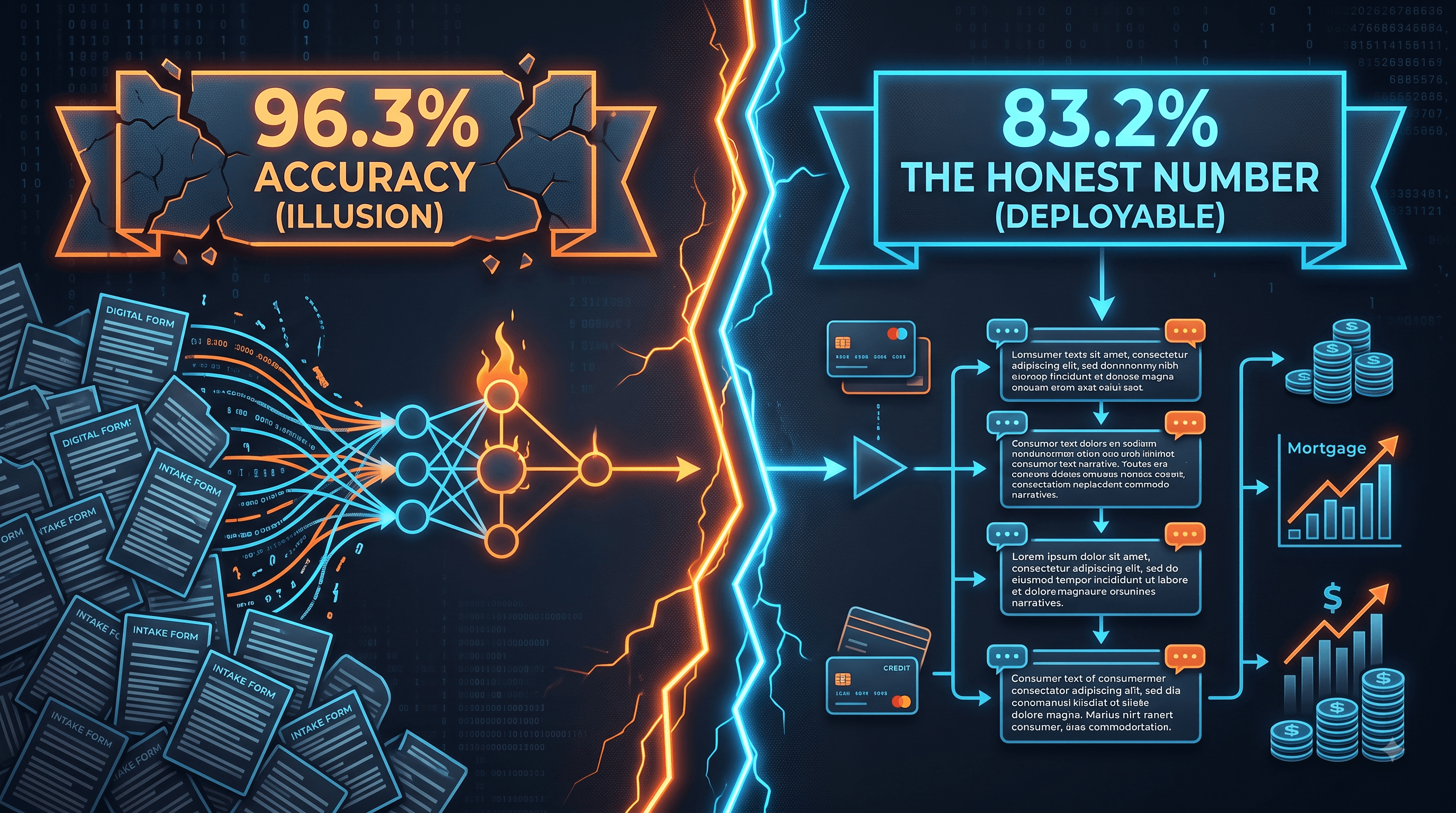
The same complaint-routing model scores 96.3% or 83.2% depending on which three columns you leave in the training data. The high number is the intake form being read back to you. This is what the leakage audit found before a single model was trained, why 83.2% is the honest figure, and how the same model — given permission to say "I don't know" — becomes deployable at 90.7% accuracy on 79.5% of traffic.
29 July 2026
EdgeGuard: AI-Driven Predictive Maintenance for Power Transformers
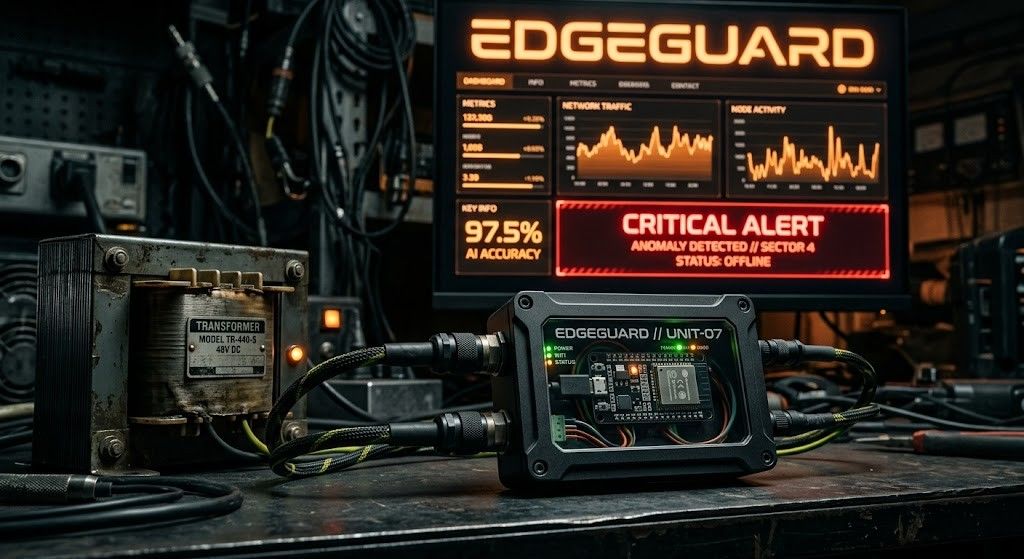
Power transformers are among the most critical assets in electrical distribution infrastructure. Their unexpected failure can result in power outages, safety hazards, equipment damage, expensive repairs, and long service interruptions. Traditional transformer maintenance practices often rely on periodic manual inspection, offline testing, or run-to-failure maintenance. These methods are expensive, slow, labor-intensive, and unable to detect rapidly developing faults in real time. EdgeGuard is an AI-driven, edge-computing predictive maintenance system designed to continuously monitor transformer health and forecast failures before catastrophic damage occurs. The system acts as a retrofittable “Digital Doctor” for distribution transformers by combining low-cost industrial sensors, an ESP32 microcontroller, local intelligence, machine learning-based risk prediction, autonomous relay control, and a real-time web dashboard. The proposed system monitors six major transformer health indicators: temperature, humidity, vibration, oil level, current, and voltage. These signals are normalized and processed through a Multi-Layer Perceptron neural network to classify transformer condition and estimate failure risk. If the predicted risk crosses a critical threshold of 80%, EdgeGuard automatically triggers a relay through GPIO 26 to isolate the transformer from the electrical network. The system also supports secure remote control, dashboard monitoring, API-key-based hardware authentication, JWT-based user access, WebSocket live updates, and automatic live-hardware detection. With an estimated deployment cost of approximately ₹3,850, EdgeGuard offers a low-cost alternative to conventional transformer monitoring systems. Its cloud-independent operation and edge-based decision-making make it especially useful for rural and semi-urban distribution grids where connectivity and maintenance resources are limited.

28 July 2026
ANALYZING TOXIC USER BEHAVIOR AND RISK PATTERNS IN ONLINE GAMING PLATFORMS
This study shows that behavioral data alone can't reliably predict gaming toxicity — but a risk-based model combining behavioral and engineered features does a much better job of flagging the small segment of high-risk users driving disproportionate harm.