
Real-Time Compliance
In industries like nuclear power, "operational excellence" is a safety imperative. The complexity of modern enterprise data, often spread across the SOP and siloed databases, creates a knowledge gap that makes real-time, compliant decision-making difficult and costly without someone experienced behind the wheel.
The Problem
Challenges for a Technical Supervisor
Human supervisors are the final authority in emergency scenarios, but they face cognitive and logistical hurdles that can lead to errors.
Cognitive Overload: In complex environments, information is often not documented but resides in "legacy knowledge". During an emergency, a supervisor may struggle to recall specific, rarely used SOP subsections.
Manual Data Cross-Referencing: Determining if a team is compliant requires manually checking HR databases against current shift logs and SOP certification requirements. This is time-consuming and prone to human oversight.
Calculating Real-Time Variable Budgets: Manually calculating radiation dose budgets for multiple employees while simultaneously managing a reactor event is extremely difficult and risks exceeding safety limits
Shift-Change Blindness: If an employee's status changes to "inactive" mid-shift, a human supervisor might not notice the immediate compliance gap in staffing requirements until an audit or incident occurs.
Challenges for an AI Agent
While an AI agent can process data instantly, it faces technical risks that must be managed through "grounding" in real data.
Hallucination: LLMs can "hallucinate" or invent SOP paragraphs or safety limits if they are not strictly grounded in a semantic layer of the actual plant documentation.
Lack of Real-World Intuition: An AI might follow the "letter of the law" of an SOP but fail to account for physical nuances on the plant floor that a human supervisor would sense immediately.
Data Latency and "Messy" Inputs: If the underlying data sources are "messy" or the relationships are missing, the AI may produce "garbage in, garbage out" results, leading to incorrect compliance flags.
Terno's solution
**Terno **can compliment a human supervisor with semantic data and safe execution. Let's take an example
The Problem: Identifying which employees are legally allowed to perform an emergency reactor valve shutdown.
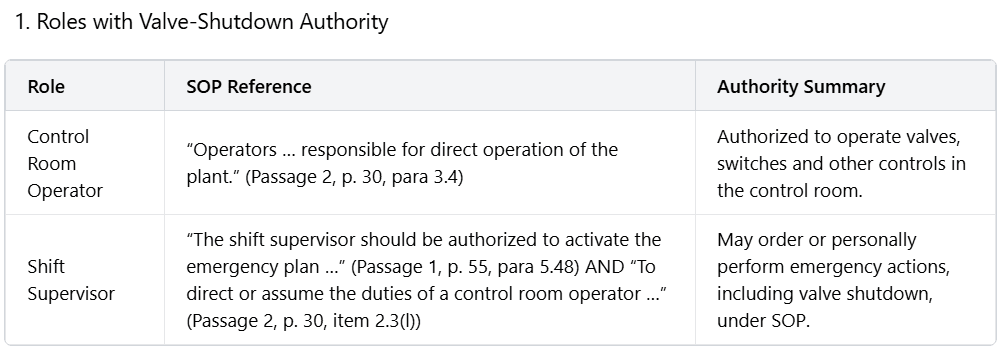
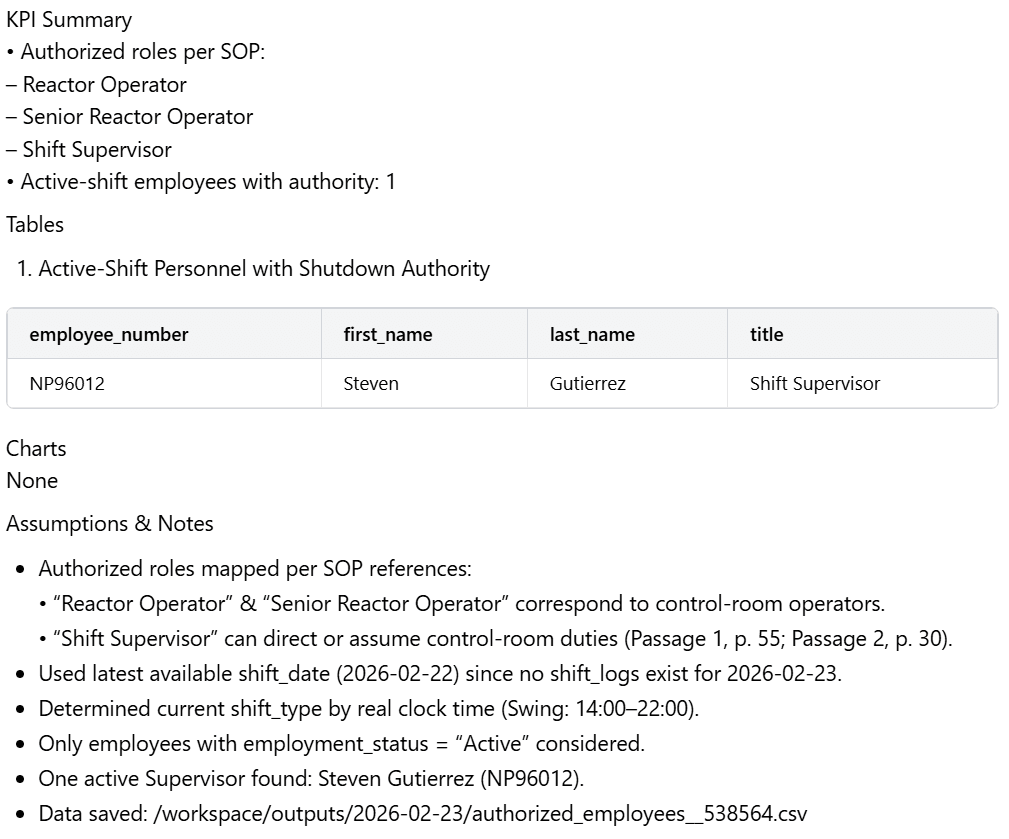
The AI Insight: Terno cross-referenced the shift log with HR certification data and plant SOPs, identifying that while several operators were present, none held the required "Reactor Operator" or "Senior Reactor Operator" licenses for that specific task.
The Decision Support: It then identified the Shift Supervisor as the "best-suited" authority to oversee the task under emergency provisions, citing specific SOP sections (e.g., Passage 4, p. 24).

Let us consider another situation where in case of a critical loss in coolant flow where** every second counts.**
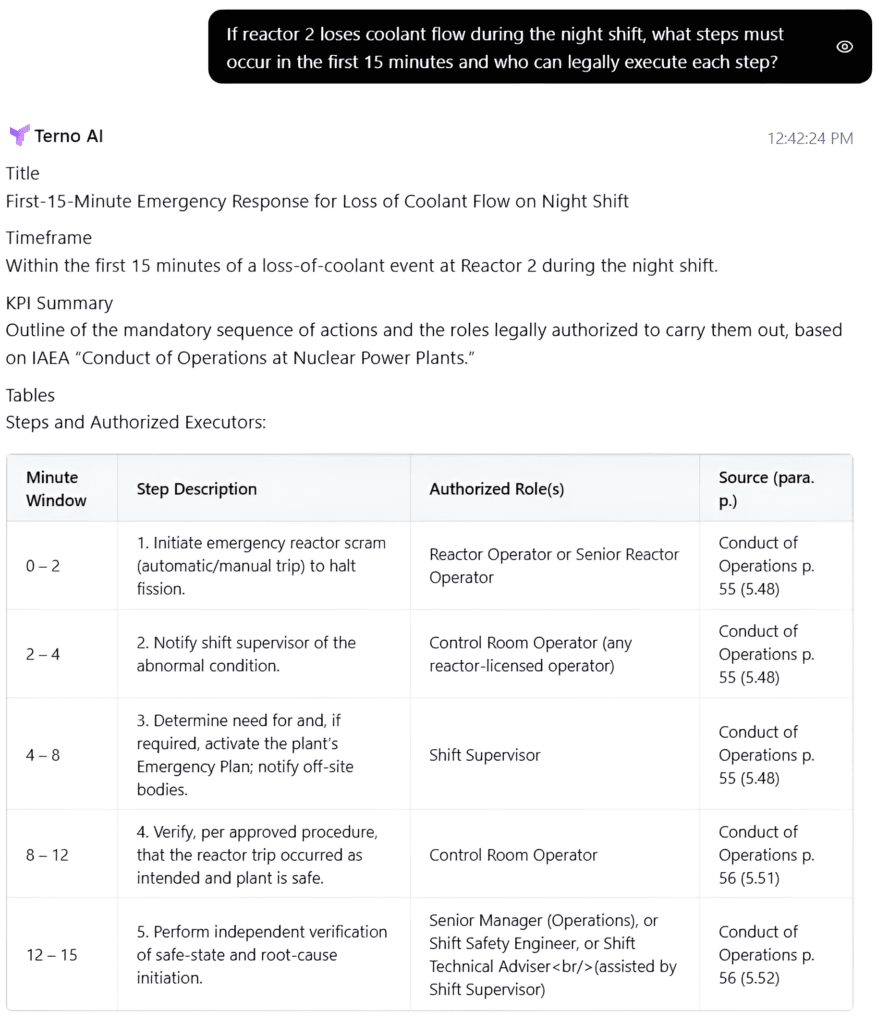
Sequence Mapping: Terno generated a minute-by-minute sequence of required actions, ranging from initial monitoring to activating the plant Emergency Plan.
Legal Execution: It mapped each action to the authorized role, such as the Control Room Operator for execution and the Shift Supervisor for decision-making, ensuring no procedural lapses occurred.
The Architecture
Terno AI functions as an Agentic Reasoning Engine grounded in a multi-modal data environment.
Live Data Synchronization: Terno establishes direct, low-latency bridges to enterprise RDBMS and real-time shift logs. Instead of relying on static files, it synthesizes live SQL queries to track environmental states, such as worker radiation doses or active-shift counts. Every insight is based on the current "source of truth".
Grounded Agentic RAG: To eliminate hallucinations, Terno uses Retrieval-Augmented Generation (RAG) anchored to technical manuals. Every recommendation is cross-referenced against high-dimensional vector embeddings of SOPs, providing deterministic verification and exact-paragraph citations (e.g., IAEA SSR-2/2 § 5.48) for every proposed action.
Computational Logic: For complex, multi-step analytical queries, such as dynamic radiation dose budgeting or shift-gap forecasting, Terno can programmatically execute Python code to perform high-precision calculations and data modeling that go beyond standard text retrieval.
Conclusion: A New Standard for Industry
AI-driven operational excellence reduces the cognitive load on human operators, allowing them to focus on high-value strategic decisions while the** AI handles the complex cross-referencing of data and compliance.** Whether it is managing mid-day staffing gaps or navigating an "Alert" classification, Terno AI can ensure your organization remains safe, compliant, and efficient.
Schedule a demo.
Register for our upcoming webinars to hear experts share best practices and real-world results.
18 August 2026
The Honest Number Was 83%: Leakage, Abstention, and a Complaint Router You Can Actually Deploy
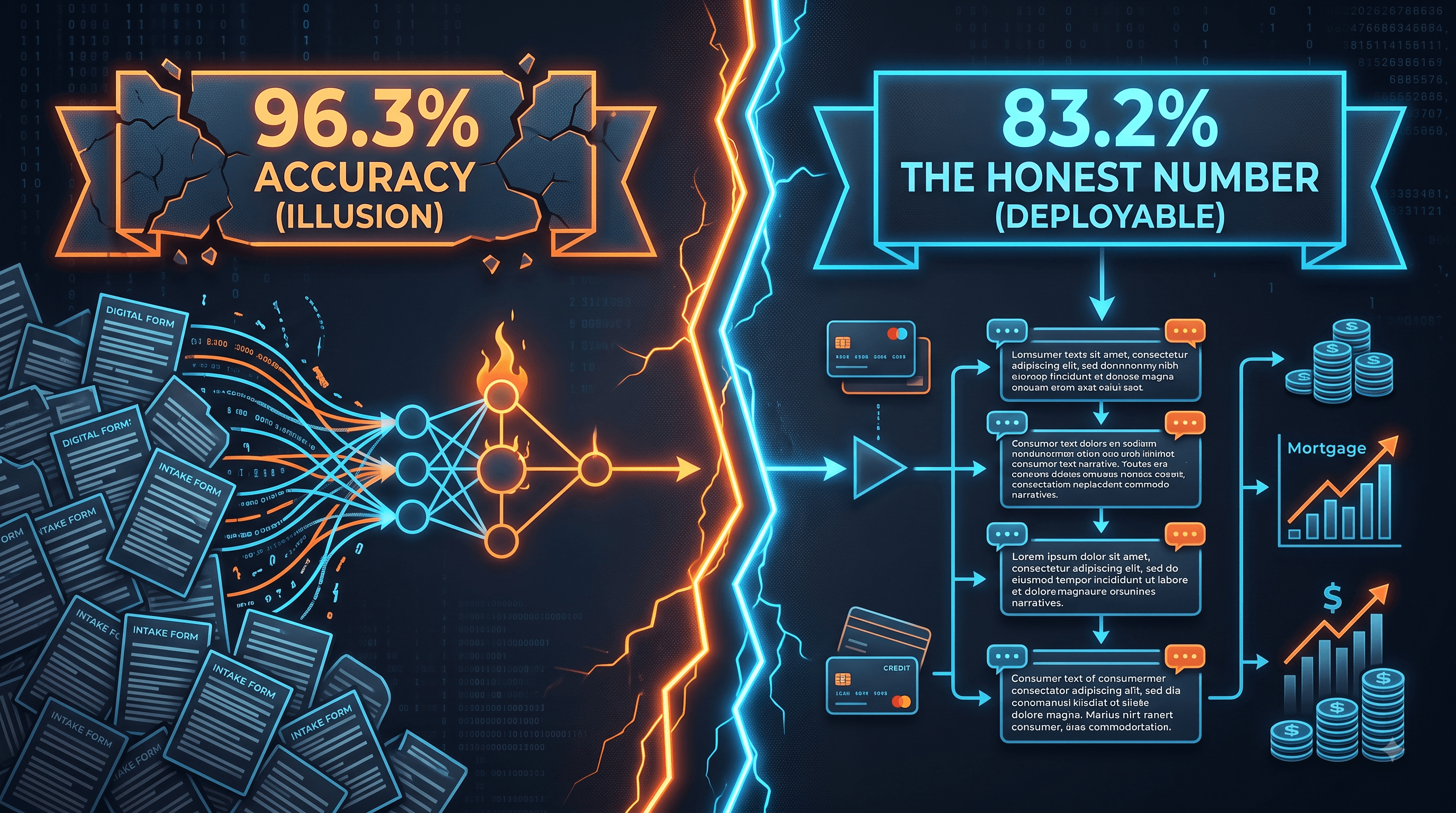
The same complaint-routing model scores 96.3% or 83.2% depending on which three columns you leave in the training data. The high number is the intake form being read back to you. This is what the leakage audit found before a single model was trained, why 83.2% is the honest figure, and how the same model — given permission to say "I don't know" — becomes deployable at 90.7% accuracy on 79.5% of traffic.
29 July 2026
EdgeGuard: AI-Driven Predictive Maintenance for Power Transformers
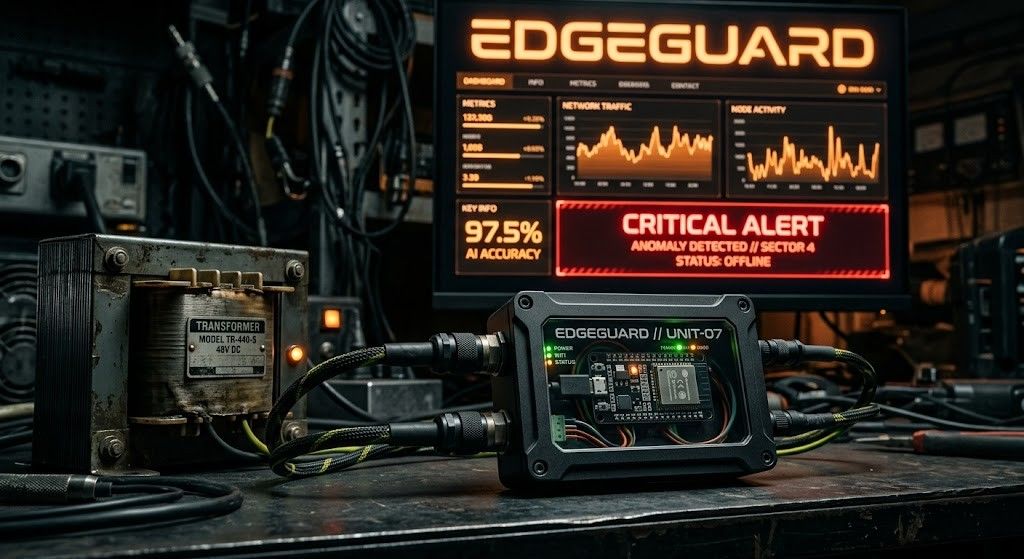
Power transformers are among the most critical assets in electrical distribution infrastructure. Their unexpected failure can result in power outages, safety hazards, equipment damage, expensive repairs, and long service interruptions. Traditional transformer maintenance practices often rely on periodic manual inspection, offline testing, or run-to-failure maintenance. These methods are expensive, slow, labor-intensive, and unable to detect rapidly developing faults in real time. EdgeGuard is an AI-driven, edge-computing predictive maintenance system designed to continuously monitor transformer health and forecast failures before catastrophic damage occurs. The system acts as a retrofittable “Digital Doctor” for distribution transformers by combining low-cost industrial sensors, an ESP32 microcontroller, local intelligence, machine learning-based risk prediction, autonomous relay control, and a real-time web dashboard. The proposed system monitors six major transformer health indicators: temperature, humidity, vibration, oil level, current, and voltage. These signals are normalized and processed through a Multi-Layer Perceptron neural network to classify transformer condition and estimate failure risk. If the predicted risk crosses a critical threshold of 80%, EdgeGuard automatically triggers a relay through GPIO 26 to isolate the transformer from the electrical network. The system also supports secure remote control, dashboard monitoring, API-key-based hardware authentication, JWT-based user access, WebSocket live updates, and automatic live-hardware detection. With an estimated deployment cost of approximately ₹3,850, EdgeGuard offers a low-cost alternative to conventional transformer monitoring systems. Its cloud-independent operation and edge-based decision-making make it especially useful for rural and semi-urban distribution grids where connectivity and maintenance resources are limited.

28 July 2026
ANALYZING TOXIC USER BEHAVIOR AND RISK PATTERNS IN ONLINE GAMING PLATFORMS
This study shows that behavioral data alone can't reliably predict gaming toxicity — but a risk-based model combining behavioral and engineered features does a much better job of flagging the small segment of high-risk users driving disproportionate harm.