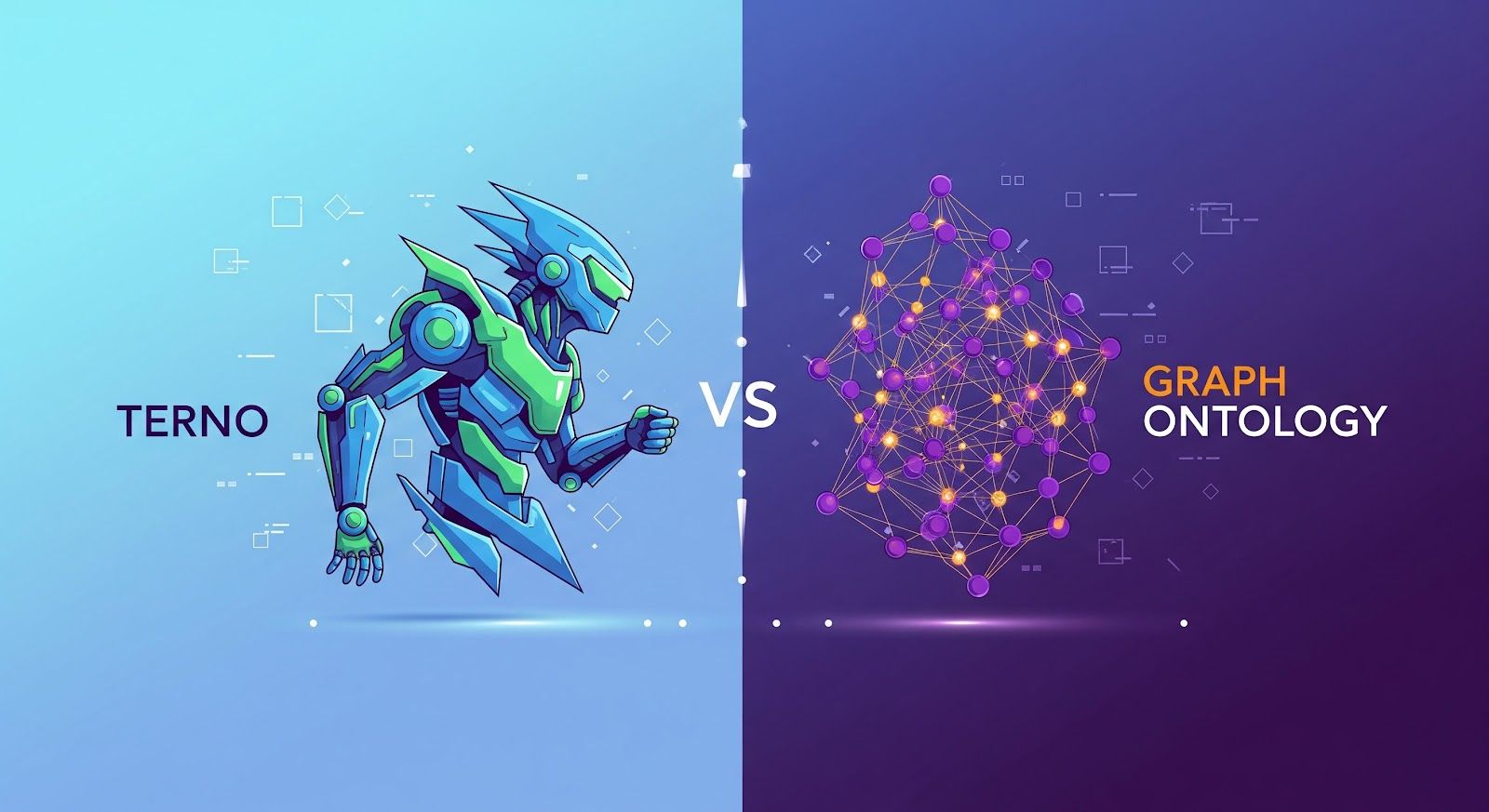
Why Semantic Layers Outperform Graph Ontologies in LLM-Based Text-to-SQL Systems
Text-to-SQL has not failed because models cannot write SQL. It has failed because we keep giving Large Language Models the wrong kind of context.
For years, the industry has relied on ER diagrams, ontologies, and graph-based schema models to explain databases to machines. These tools were built for humans to visualise structure, not for language models that reason using tokens, descriptions, and probability.
As enterprise benchmarks such as BIRD and Spider have demonstrated, graph-heavy systems struggle the moment schemas become messy, ambiguous, or truly enterprise-grade.
The most accurate modern Text-to-SQL systems have quietly shifted direction:
They prune schemas instead of visualizing everything
They inject semantic descriptions instead of traversing graphs
They reason over language rather than rigid relationships
This is where semantic layers begin to replace ontologies, not as documentation, but as a core execution layer designed for LLM reasoning.
In our new whitepaper, Semantic Layer: Terno Approach vs Graph Ontology, we explain:
Why ontology-based systems structurally fail LLM reasoning
How automated semantic layers outperform graphs on enterprise data
Why top-performing Text-to-SQL architectures align with semantic narration rather than ontology traversal
What this shift means for enterprises investing in AI-driven analytics
Read the full whitepaper here: Semantic_Layer_Terno_Approach_vs_Graph_Ontology
For the enterprise seeking to unlock the value of its data, the directive is therefore unambiguous.** Do not invest in tools that merely visualise your schema that freeze meaning in time. Invest instead in systems that can automatically understand, narrate, and evolve your data.**
18 August 2026
The Honest Number Was 83%: Leakage, Abstention, and a Complaint Router You Can Actually Deploy
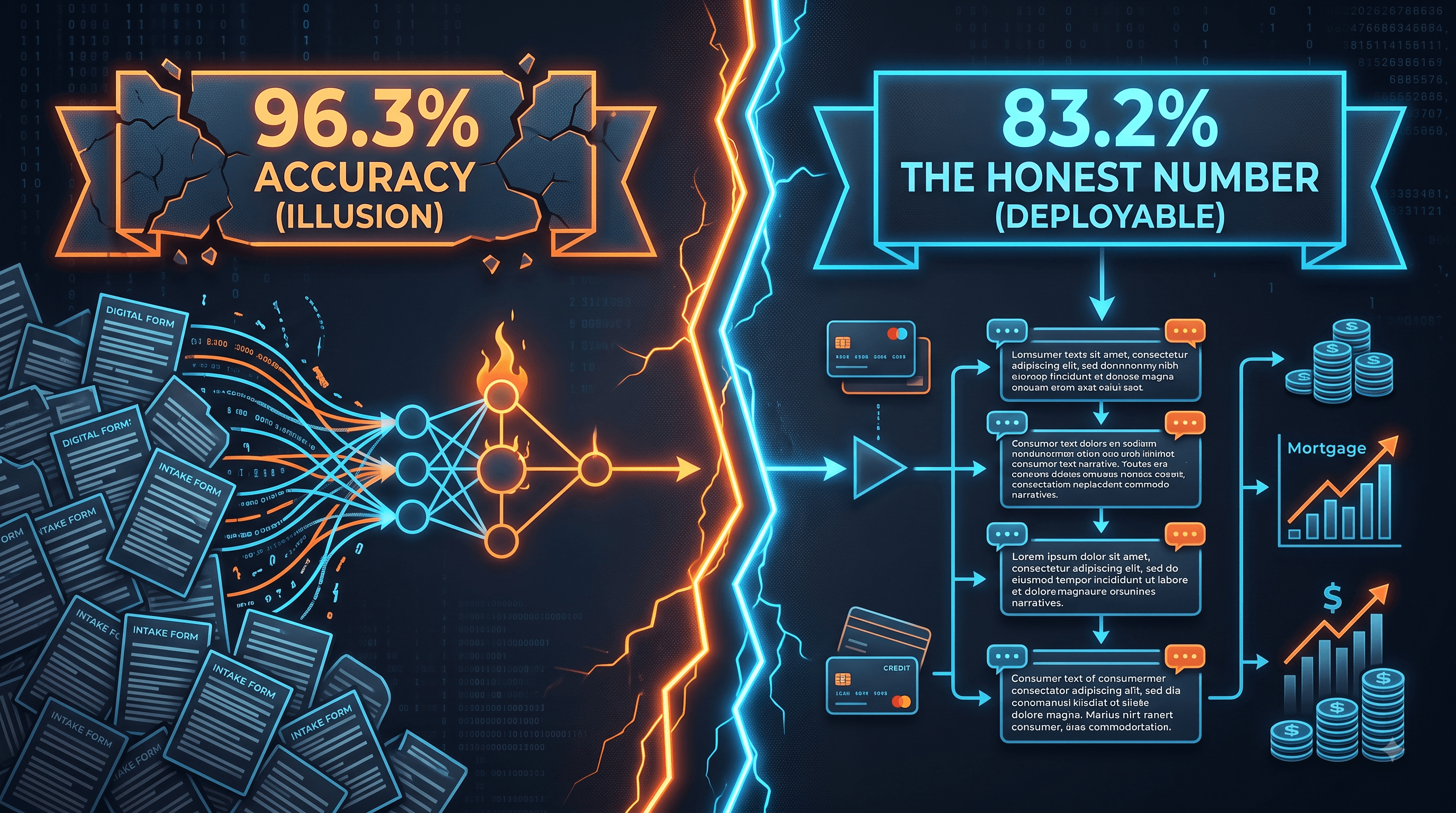
The same complaint-routing model scores 96.3% or 83.2% depending on which three columns you leave in the training data. The high number is the intake form being read back to you. This is what the leakage audit found before a single model was trained, why 83.2% is the honest figure, and how the same model — given permission to say "I don't know" — becomes deployable at 90.7% accuracy on 79.5% of traffic.
29 July 2026
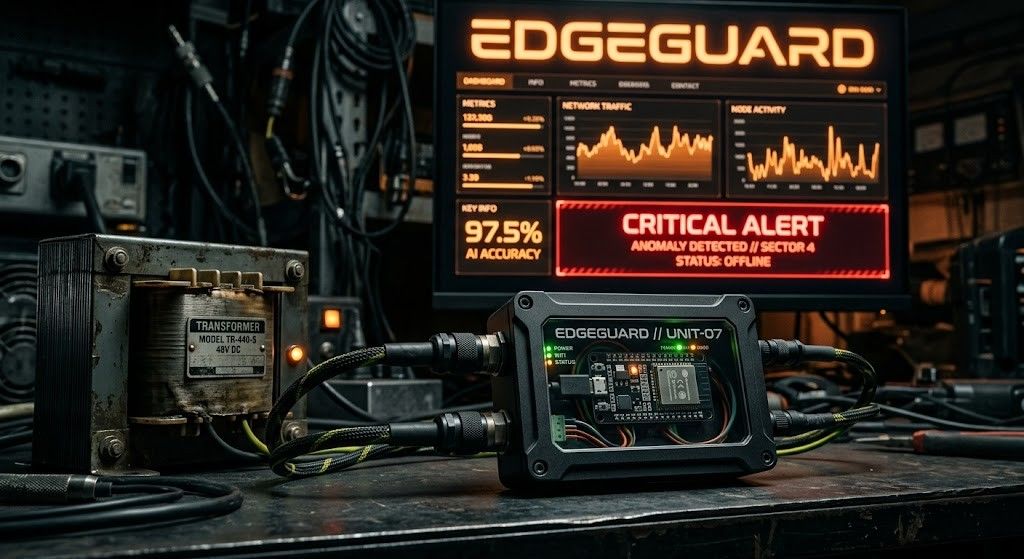
EdgeGuard: AI-Driven Predictive Maintenance for Power Transformers
Power transformers are among the most critical assets in electrical distribution infrastructure. Their unexpected failure can result in power outages, safety hazards, equipment damage, expensive repairs, and long service interruptions. Traditional transformer maintenance practices often rely on periodic manual inspection, offline testing, or run-to-failure maintenance. These methods are expensive, slow, labor-intensive, and unable to detect rapidly developing faults in real time. EdgeGuard is an AI-driven, edge-computing predictive maintenance system designed to continuously monitor transformer health and forecast failures before catastrophic damage occurs. The system acts as a retrofittable “Digital Doctor” for distribution transformers by combining low-cost industrial sensors, an ESP32 microcontroller, local intelligence, machine learning-based risk prediction, autonomous relay control, and a real-time web dashboard. The proposed system monitors six major transformer health indicators: temperature, humidity, vibration, oil level, current, and voltage. These signals are normalized and processed through a Multi-Layer Perceptron neural network to classify transformer condition and estimate failure risk. If the predicted risk crosses a critical threshold of 80%, EdgeGuard automatically triggers a relay through GPIO 26 to isolate the transformer from the electrical network. The system also supports secure remote control, dashboard monitoring, API-key-based hardware authentication, JWT-based user access, WebSocket live updates, and automatic live-hardware detection. With an estimated deployment cost of approximately ₹3,850, EdgeGuard offers a low-cost alternative to conventional transformer monitoring systems. Its cloud-independent operation and edge-based decision-making make it especially useful for rural and semi-urban distribution grids where connectivity and maintenance resources are limited.

28 July 2026
ANALYZING TOXIC USER BEHAVIOR AND RISK PATTERNS IN ONLINE GAMING PLATFORMS
This study shows that behavioral data alone can't reliably predict gaming toxicity — but a risk-based model combining behavioral and engineered features does a much better job of flagging the small segment of high-risk users driving disproportionate harm.